













In the late eighties, a human rights movement began in Bhutan against abuses and discrimination on Nepali-speaking southern Bhutanese citizens. Citizens of these origins, also known as Lhotshampas, experienced a variety of human rights violations including culture and language imposition to denial of children’s school admission. The people called for a democracy with constitutional guarantee of human rights and rule of law.
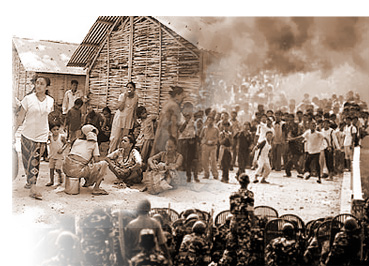
Seen as a threat to Bhutan’s autocratic political system, the kingdom resorted to ethnic cleansing in order to prevent the demand for democracy from southern Bhutan. The government labeled these people as ‘illegal immigrants’ and launched a military assault to forcibly evict more than 110,000 Bhutanese people, nearly a sixth of the kingdom’s total population at the time.
Contrary to Bhutanese government propaganda that a chunk of the country decided to emigrate ‘voluntarily’; military forces resorted to violence including torture, indiscriminate arrests, rape, murder, loot and burning of houses among others to extradite the residents from the area. Further, they confiscated citizenships, property documents and forced many to sign papers renouncing Bhutanese citizenship.
The refugees eventually settled in seven camps in eastern Nepal managed by the UNHCR (United Nations High Commissioner for Refugees). Others scattered across the country and areas including 25,000 in India with no social support.
Nearly 20 years have passed and in 2007 it was estimated that around 105,000 refugees still remained in these camps. Conditions detereorated dramatically due to budget cuts and exodus of young people and educated individuals that have sought to work outside the camps. Huts built out of bamboo held over 6 people on average. Food rations have decreased. Clothes have not been distributed for a number of years and bathing soap has not been provided for the past three years.
With every Bhutanese that enters America, there’s a story behind each face with hope for a new life.
"Refugees are not born but created by states, individuals and groups."
Sadako Ogata
UN High Commissioner for Refugees

Suruwat, Inc. a non-profit organization © 2009

